Inside the intensely competitive world of today's pro-level drifting, victory is not merely purely a result of raw engine power or behind-the-wheel aggression. Conversely, it has become a intricate discipline which demands a painstaking marriage of choosing a inherently capable vehicle platform, arming it with the correct competition hardware, and, most essentially, understanding its dynamic performance on the circuit through advanced suspension tuning applications. This definitive manual acts as your blueprint from the initial concept of a drift build all the way to the last engineering-refined refinements that transform a strong car into a predictable winner. We will delve deep into the art and science of car suspension tuning, showing how a state-of-the-art vehicle dynamics tool like GripDial eradicates assumptions and delivers exceptional insight into your vehicle's true behavior.
The bedrock of any successful drift car is, without question, the chassis itself. A select group of cars have attained legendary standing within the global oversteer scene due to their built-in weight distribution, robust build quality, and the enormous range of performance parts available. Choosing the optimal car is the initial and most significant choice a builder will make. For instance, the BMW E36 is widely regarded as one of the finest all-around cars for drifting of the modern era. Its excellent balanced front-to-rear weight, alongside a driven rear axle setup and extremely reliable six-cylinder motors, forms a platform that is at once accessible for beginners and incredibly effective in the control of a professional competitor. The evolution of this philosophy, the E46 model BMW, builds upon these attributes with a more developed structure, wider stance for improved high-speed stability, and yet increased turning capability straight from the factory. Another formidable option in the pro scene is the Chevrolet Corvette C6.
This American sports car offers a distinctive combination of strengths to the drifting discipline, including a low-mass aluminium chassis, a backwards-positioned drivetrain component that aids in an ideal weight distribution, and the colossal torque of a big GM LS engine. This blend makes it an utter weapon on track, able of starting and sustaining extended angles with relatively effortless deployment of throttle. For drivers desiring exceptional bang-for-the-buck, the Nissan 350Z rises above as a prime choice. It arrives from the manufacturer with a stiff chassis, a decent original locking differential, and the free-revving V6 motor that offers sufficient power and torque for practicing and advancing in the discipline. Its successor, the Nissan Z34, presents more refinements in structural rigidity, handling precision, and peak motor power, establishing its status as a favorite pick among serious drivers. Additional iconic cars that deserve attention encompass the agile rotary-powered Mazda FC RX-7, the most popular Nissan S13 240SX, the V8-powered Ford Mustang SN95, the electronic-equipped BMW E90, and the compact yet incredibly engaging and forgiving Mazda MX-5. Every single one of these chassis provides a unique array of attributes, challenges, and possibilities, but they all possess the basic elements required to be transformed into a competitive drift machine.
However, choosing the optimal car is merely the starting point. To access the complete performance of any of these machines, major modifications to the steering geometry and chassis control systems are utterly non-negotiable. This is where the domain of specialist drift-spec parts becomes critical view. The one most game-changing upgrade for a serious competition vehicle is the integration of a drift-spec drift angle kit. These advanced kits, like those manufactured by industry leaders like specialist manufacturers, are engineered to significantly increase the chassis's maximum steering angle. A OEM production vehicle is highly constrained in how far its steering tires can rotate, a engineering limitation for daily driving. In sliding, however, maximum countersteering is constantly necessary to catch and hold a slide. An steering kit substitutes the stock uprights, tie rods, and potentially A-arms with parts that permit the front tires to achieve steering lock over 70 or even 80 degs, compared to a normal stock setting of around 40 to 50 degs.
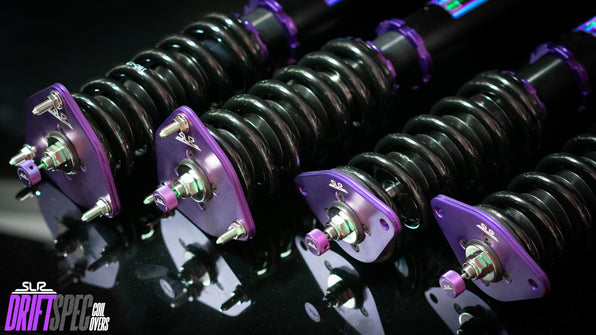
This vastly expanded steering angle provides the operator with dramatically enhanced control during a angle, allowing it to be far simpler to start a slide, maintain it through a long corner, and switch fluidly from one angle to another. The improvement in drivability is nothing short of transformative. Paired with a appropriately chosen angle kit is the equally critical enhancement to the car's suspension. Off-the-shelf or even premium sport dampers are just not intended for the particular and extreme demands of sliding. A dedicated system of adjustable dampers is of utmost importance. These specific suspension components have custom damping rates and spring rates that are designed for the extreme load shifting that is typical of sliding. When a pilot initiates a slide, the chassis's inertia is thrown violently to the outside of the corner. Correct performance coilovers manage this shift in a controllable manner, enabling the car to find its balance quickly and giving the pilot precise feedback through the steering wheel and seat. They also enable exact tuning of stance, damping stiffness, and cross-weight, which are all key aspects of dialing in the vehicle's handling to a given track or competition technique. As a system, a top-tier angle modification system and a properly selected pair of drift-spec coilovers constitute the undeniable physical foundation upon which all subsequent tuning is built.
Once the core components is fitted, the following vital stage in the project is the precise tuning of the chassis's alignment. This is the realm of car suspension tuning, a methodology that can seem intimidating to the uninitiated but is, in reality, the key to transforming a set of capable pieces into a harmonious and predictable vehicle. The most debated element of suspension geometry for oversteer is definitely camber. Wheel camber is the inclination of the rim in relation to the upright axis when viewed from the forward of the chassis. When the top edge of the tire is angled towards the chassis, this is referred to as camber-in. In oversteer driving, inward-leaning wheels on the front wheels is universally employed and is seen as essential. The purpose is deeply linked to tire contact.
When a car is turning at limit sideways angles, the chassis rolls to the outer of the turn. This lean makes the outside front wheel to drift telemetry software lose its best footprint with the tarmac. By applying an inward tilt, the tire is pre-leaned to counteract this roll. As the vehicle leans into the bend, the tire flattens out against the road surface, increasing its grip at the critical time when it is needed most for steering authority. Typically, front axle angles for a competition drift machine range from approximately -3 degrees to as high as -5 degrees or even more, contingent on the details of the chassis geometry, rubber type, and operator preference. The back wheels also employ inward tilt, but the values are generally more conservative and subtler than the front axle. Excessive inward lean at the back can cause the vehicle to extremely prone to oversteer and difficult to manage on power input, as it shrinks the usable grip area of the powered tires during forward power delivery. Thus, rear axle camber settings are frequently in the range of -1 degree to -3 degrees, achieving a delicate equilibrium between providing enough lateral bite to aid in starting and sustaining the angle while simultaneously preserving good grip for power-down the turn. alignment is merely one part of the broader alignment equation, which additionally includes toe, caster angle, and bump steer adjustment.
Toe is the direction of the tires when viewed from the top. Inward toe means the leading edges of the tires are nearer together than the trailing edges, while negative toe means the converse. For oversteer, a modest amount of front axle toe-out is often used to sharpen the initial steering response, making the car feel more agile and eager to initiate a slide. Rear toe is typically set to zero or a very minute amount of positive toe to foster straight-line stability under throttle. self-centering is the longitudinal or aft inclination of the suspension pivot when observed from the side-on of the car. Increased positive caster increases steering feel and high-speed stability, and it furthermore adds to inward lean increase during turning, which is highly beneficial. Setting these values is a intricate interaction where a change to a single value can and often will affect the other settings. The old-school approach for dialing in a chassis's suspension geometry for sliding has long been a tedious endeavor of experimentation and feeling. A pilot or crew would make a modification based on intuition, drive the chassis on track, use the driver's subjective perception and comments, and then make an additional change. This cycle would iterate again and again until the car felt "acceptable" or the allotted track period was exhausted. This system is not just incredibly wasteful in terms of hours and resources, but it is furthermore inherently imprecise.
Driver feel is a famously inconsistent measurement tool, colored by countless variables such as fatigue, evolving track conditions, weather, and simply the focus of the driver on that given session. What feels "tail-happy" on one run might feel "pushing" on the following pass, resulting in contradictory feedback and counterproductive adjustments. This traditional challenge in chassis setup is precisely where state-of-the-art technology has made its mark to revolutionize the methodology.
The development and adoption of advanced suspension tuning applications has ushered in a radically different age for building and refining competitive sliding vehicles. These platforms, exemplified by cutting-edge products like data acquisition tools, operate by actively capturing the actual mechanical performance of the vehicle as it is piloted on the track. As opposed to relying on personal feel, these systems acquire objective metrics on key variables such as suspension travel, individual tire rotation, lateral and longitudinal g-forces, wheel angle, and throttle and brake position. This acquired information flow is then processed by advanced applications that can visualize and analyze the information in a actionable manner. For the first time ever, tuners and builders can see specifically what the car is exhibiting at every moment of a drift. This ability revolutionizes the whole chassis setup procedure. Imagine the specific task of dialing in the front negative camber for a particular chassis. As an alternative to applying a modification from -3 degrees to -3.5 degrees and then driving several passes to try and "feel" a change, a telemetry system can provide immediate and clear information. The software can display graphically how the suspension's contact patch is acting during the critical moments of a drift: the initial flick, mid-corner, and changing direction. It can demonstrate if the present camber setting is permitting the outside front tire to keep optimal grip or if the compound is over-stressed on its external edge.
The tool can then provide fact-based recommendations for change. Perhaps the data indicates that the outside front tire is still stressing its sidewall at -3.5 degrees of camber, indicating that even more inward lean, say -4 degrees, might be beneficial. On the other hand, the information might indicate that the tread is not reaching temperature or that the inside shoulder is degrading excessively, which could indicate that there is too much inward lean and a slight decrease back to -3.2 degrees would be more ideal. This standard of precision and practical insight was literally unimaginable in the days of exclusively manual adjustment.
The impact of using a dedicated suspension tuning tool reaches far beyond just setting camber. It serves as an priceless suspension tuning guide that is specific to your particular vehicle. When setting the damping values on your suspension, instead of depending on general advice or copying another team's setup, you can use the telemetry to see how the chassis is behaving in response to your adjustments. The software can show the suspension travel trace over a lap, revealing if the dampers are controlling the weight transfer optimally or if they are causing the car suspension tuning vehicle to become unsettled uncontrollably after a transition. It can aid in pinpointing challenges like bottoming out or topping out, allowing you to make informed adjustments to helper springs, rebound/compression values, or ride height. This approach translates equally to the detailed process of car alignment tuning. In addition to camber, the software can give insight into how modifications to toe and caster angle are influencing the car's stability during specific phases of a slide. For instance, it can help you to find the optimal amount of front axle toe out for your specific steering rack setup and competition style by analyzing the speed of turn-in response and the consistency of the vehicle at full lock. This turns the software an incredibly effective drift suspension tuning guide that is dynamically informed by the live dynamics of your own vehicle on the tarmac. It elevates the entire endeavor from a mysterious craft into a scientific development exercise.
Furthermore, the value of a platform like data acquisition is in no way limited to experienced teams with large resources. For the amateur competitor, it serves as an powerful force multiplier. It effectively gives the driver with the knowledge of a full-time race engineer without requiring the corresponding cost. It speeds up the tuning process by delivering definitive answers to challenges that would normally take seasons of trial and error to answer. A driver can learn how their specific vehicle behaves to specific adjustments, developing a deeper understanding of vehicle dynamics in the endeavor. It furthermore opens up high-level performance tuning techniques, allowing all drivers with the ambition to optimize their car to accomplish it in a efficient and productive manner. This is notably valuable in a sport like suspension engineering oversteer competition, where engineering know-how has historically been a closely guarded asset among elite teams. In the modern era, that capability can be in the toolkit of every dedicated builder.
In summary, the journey to constructing and dialing in the ideal championship-contending drift car is a comprehensive project that seamlessly combines time-honored mechanical wisdom with cutting-edge telemetry tools. It commences with the wise selection of a legendary chassis, then built upon the integration of non-negotiable drift-spec components like high-performance drift angle kits and expertly valved competition coilovers. The journey then moves into the intricate stage of alignment optimization, where values like camber, toe setting, and caster angle are carefully configured to match the car's upgraded geometry and the operator's specific technique. The final step, and what truly distinguishes the today's methodology from the past, is the use of a sophisticated vehicle dynamics tool. This platform eliminates the uncertainty and trial and error of purely feel-based adjustment by providing objective, live information on how the chassis is actually behaving. It functions as an incredible diagnostic aid, a comprehensive alignment optimization handbook, and a comprehensive vehicle dynamics tool. In unison, this integrated methodology guarantees that every aspect of the drift machine—from the choice of the car to the most minute click on the damper—is refined for peak competitiveness on the competition venue. It embodies the total maturation of the sport of drifting, connecting raw pilot talent with data-informed suspension engineering to create the perfect dominant machines imaginable.